
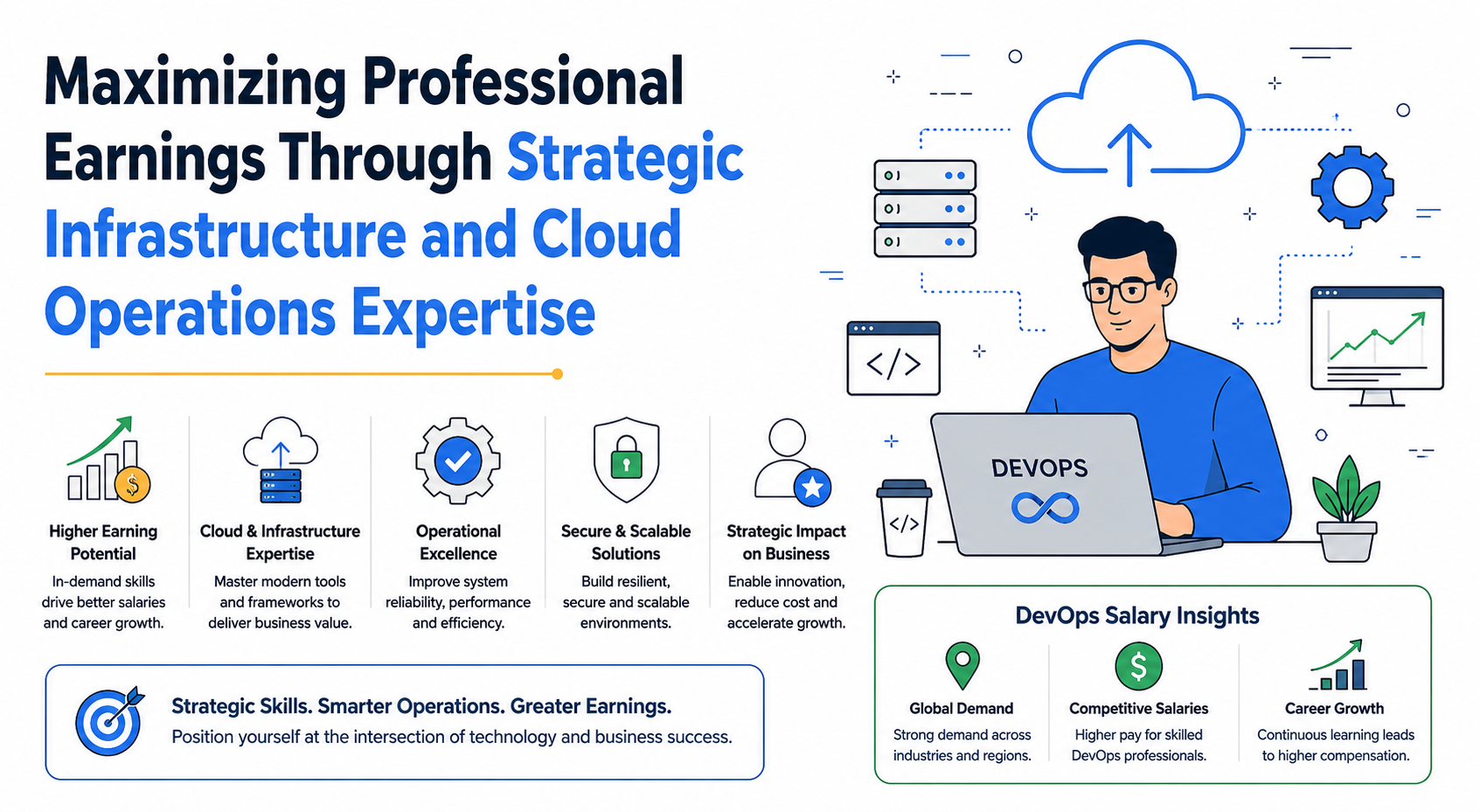
Navigating the financial landscape of Best DevOps Salary requires a proactive approach to career management. Many technology professionals underestimate the value of their unique skills, often leaving significant compensation on the table due to poor market visibility. You transform your earning potential by deliberately aligning your technical achievements with the core business objectives of your organization. This guide empowers you to evaluate your market position, negotiate effectively, and build a career path that consistently yields top-tier financial rewards.
Fundamentals of Competitive Compensation Structures
The Core Purpose of Best DevOps Salary Models
[Best DevOps Salary] benchmarks act as essential navigational tools for engineers. These figures reveal the direct connection between specialized system reliability skills and organizational profitability. By treating your infrastructure as a proprietary product, you transition from basic support tasks to high-level architectural roles, which triggers substantial compensation increases.
Mechanics of the Best DevOps Salary System
The [Best DevOps Salary] ecosystem typically operates across three distinct tiers: massive cloud-native organizations, legacy-heavy enterprises, and boutique consultancy firms. Each environment applies unique leveling formulas to determine your pay. You gain a significant advantage by understanding that your specific contributions—such as incident reduction or platform automation—matter more to recruiters than generic job titles.
Analyzing Eligibility vs. Performance Standards
Elite [Best DevOps Salary] tiers demand demonstrated operational maturity. Hiring managers prioritize candidates who prove their ability to manage distributed systems under pressure. You optimize your profile by highlighting specific instances where your work improved cloud cost efficiency or increased system uptime for business users.
Key Drivers for Earning Potential
Influence of Seniority and Design Authority
Experience correlates strongly with [Best DevOps Salary] tiers because companies pay for high-level decision-making power. Professionals who step into leadership roles early in their careers build a history of architectural influence. This legacy of successful infrastructure ownership effectively accelerates your path toward the highest compensation brackets.
Importance of Continuous Skill Evaluation
Degree credentials provide a baseline, but active certifications and hands-on cloud experience dictate your [Best DevOps Salary] growth. Niche expertise in security-focused infrastructure or complex platform engineering differentiates you from the general pool of applicants. You secure premium offers by maintaining a consistent record of high-impact technical learning.
Performance Metrics as Compensation Levers
Quantifiable reliability metrics define the upper limits of [Best DevOps Salary] packages. Engineers who implement service-level objectives successfully and drive widespread platform adoption consistently command more interest from top employers. These performance indicators prove your worth by showing how your technical decisions protect revenue.
Verifying Professional Impact
Employers scrutinize your history to understand your specific contributions to past environments. Senior roles necessitate evidence of cross-team coordination and architectural mentoring. Creating a portfolio of your work—especially focusing on how you reduced infrastructure overhead—validates your target [Best DevOps Salary] requests.
Industry Frameworks and Market Comparisons
Scoring Your Technical Value
The hierarchy of [Best DevOps Salary] rewards depth in platform engineering and secure infrastructure. Meanwhile, roles limited to manual monitoring or basic ticket resolution occupy lower pay bands. You climb the compensation ladder by focusing on complex domains like FinOps, MLOps, or multi-cloud governance.
Understanding Regional and Scale Variations
Market size and regional cost-of-living adjustments create significant variance in [Best DevOps Salary] offers. Global tech leaders pay premiums for top-tier talent, whereas smaller organizations often enforce rigid, geo-based pay caps. Utilize current market intelligence to justify your salary expectations based on the actual value you deliver to your specific company.
Global Overview of Compensation Tiers
| Experience Level | Base Compensation Band | Primary Skill Focus |
|---|---|---|
| Junior Specialist | Market Entry Level | Scripting, Git, Linux |
| Senior Engineer | Mid-to-High Tier | Kubernetes, Terraform, Cloud |
| Lead Architect | Premium Salary Band | Platform Design, FinOps, Security |
| Principal Advisor | Executive/Specialist Tier | Governance, Strategy, Reliability |
Leveraging Data for Career Growth
Utilizing a [Best DevOps Salary] tracker gives you the necessary edge in salary negotiations. It allows you to objectively measure your current income against market leaders. Furthermore, it aids in long-term strategy, enabling you to pivot toward high-demand technology stacks before they hit peak market demand.
Navigating Your Path to Higher Earnings
Successful career scaling requires you to shift from routine operational work toward strategic, value-driven initiatives. Instead of merely chasing job titles, focus on developing "high-leverage" skills like cost-engineering or platform-as-a-service development. Always benchmark your total compensation, including equity and bonuses, against industry reports rather than anecdotal evidence from peers. Treat every role as a deliberate step in your professional development to ensure your income trajectory remains on an aggressive upward curve.
Execution Roadmap for Salary Mastery
Organizing Your Evidence
Collect comprehensive logs of your operational successes, emphasizing your impact on reliability metrics and system performance. Use these records to articulate how your daily activities generate direct value for your employers.
Refining Your Technical Assessments
Regularly compare your current capabilities against premium [Best DevOps Salary] job descriptions. Close any identified gaps in high-value areas like policy-as-code or reliability engineering to maximize your competitiveness.
Tracking Market Demand
Monitor industry shifts to identify which technologies currently command the highest [Best DevOps Salary] premiums. Align your personal development roadmap with these high-growth categories to future-proof your earning potential.
Integrating Secondary Professional Levers
Recognize that non-technical factors like on-call reliability and team mentorship influence your [Best DevOps Salary] potential. These traits signal leadership ability and often provide the leverage needed to secure senior-level packages.
Defining Your Final Target
Synthesize your proven track record and deep market research to set a concrete [Best DevOps Salary] goal. Enter your next negotiation from a position of data-driven confidence rather than speculation.
Strategies for Optimal Financial Outcomes
Adopting an Infrastructure-as-Product Mindset
Move beyond basic pipeline management to take full ownership of internal platform products. This shift in perspective drives higher [Best DevOps Salary] offers because you become an essential business partner rather than a service provider.
Maximizing Bonus and Certification Advantages
Acquire specialized certifications in high-demand areas like cloud cost optimization. Companies prioritize candidates who understand the financial implications of technical decisions, rewarding them with significant pay premiums.
Targeting Specialized High-Value Opportunities
Focus your career on high-scarcity domains such as incident command leadership or security-platform architecture. These roles command higher [Best DevOps Salary] ceilings due to their critical nature in modern enterprise environments.
Avoiding Common Professional Traps
Many engineers stall their growth by relying on outdated job categories. Furthermore, anchoring your expectations to generic market averages—which often undervalue specialized skill sets—prevents you from securing your full worth. Link your contributions directly to organizational risk and revenue to bypass these common roadblocks.
Case Examples of Successful Salary Application
The Entry-Level Launch
A junior engineer masters basic on-call protocols and automates routine deployments. They document these initial wins to lay a firm foundation for future [Best DevOps Salary] increases.
The Seasoned Professional Transition
A senior engineer takes over architectural ownership, leading the adoption of reliability objectives across multiple teams. Their [Best DevOps Salary] rises because they define the standards rather than just executing tasks.
The Specialist Hero Approach
A security expert deploys automated policy-as-code frameworks across the organization. They justify a massive [Best DevOps Salary] jump by demonstrating a significant reduction in long-term regulatory and security risk.
Frequently Asked Questions (FAQs)
- How much does physical location influence my potential Best DevOps Salary? Geography remains a vital component. Even in remote-first cultures, firms often calibrate [Best DevOps Salary] tiers against local living costs and market demand.
- What is the most accurate way to calculate my market value? Assess your project scope and leveling first. Then, compare these variables against [Best DevOps Salary] reports that account for specific premiums in niche domains like DevSecOps.
- Are performance-based bonuses typically included in Best DevOps Salary benchmarks? Benchmarks usually display base salary only. You must negotiate equity, signing bonuses, and other benefits independently to fully understand your [Best DevOps Salary] package.
- Which DevOps specializations command the highest compensation? Platform engineering, secure infrastructure, and site reliability roles currently sit at the top of the [Best DevOps Salary] scale due to their immense business impact.
- Should I prioritize base salary or equity in a new offer? This decision relies on your risk tolerance. Early-stage startups offer equity upside, whereas established enterprises provide higher base [Best DevOps Salary] and long-term stability.
- How often should I audit my current compensation? Perform a market [Best DevOps Salary] review annually. This cadence ensures your compensation stays aligned with evolving industry trends and your growing professional experience.
- Does a senior title automatically secure a higher Best DevOps Salary? Employers pay for decision-making scope, not just job titles. A highly impactful senior engineer often earns more than a manager with fewer [Best DevOps Salary] levers.
- How can I use market data to negotiate a raise? Base your argument on measurable achievements like infrastructure cost reduction or SLO success. Do not just use [Best DevOps Salary] averages; prove your specific merit.
- What impact will AI tools have on future salary trends? AI will commoditize basic L1/L2 tasks, which may create a plateau for standard [Best DevOps Salary] roles. Conversely, it will skyrocket demand for senior architects who manage sophisticated AI infrastructure.
- What steps facilitate moving into a higher salary bracket? Shift your energy from operational maintenance to strategic reliability engineering. By linking your work directly to [Best DevOps Salary] drivers like business outcomes, you command premium pay.
Concluding Thoughts
Maintaining a successful and lucrative career requires intentional effort and continuous assessment of your professional value. By prioritizing roles that enhance organizational stability and cost effectiveness, you create a sustainable path to higher income. Continue sharpening your technical edge and negotiating with firm evidence to ensure your compensation consistently reflects your expertise in the competitive global market.



Top comments (0)