
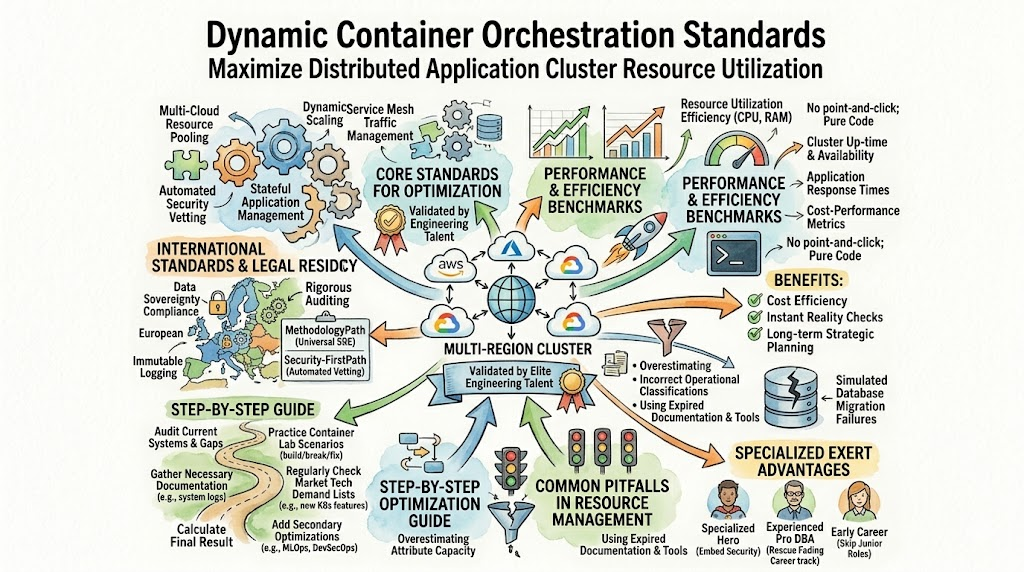
Corporate tech sectors face massive disruptions when manual software delivery methods stall feature releases. Development teams write code quickly, yet operations personnel often struggle to deploy those updates without triggering system outages or database conflicts. This friction creates a severe bottleneck that lowers company revenue and exhausts engineering talent. Organizations desperately need unified automation frameworks to bridge the gap between software creation and live platform stability. Engineers who want to escape routine troubleshooting and secure high-paying positions require an objective method to prove their architectural capabilities. Enrolling in an industry-accepted validation pathway like the Best DevOps Certification provides the explicit roadmap needed to design self-healing cloud ecosystems and claim elite global employment roles.
What Is a Best DevOps Certification?
The Core Purpose of Best DevOps Certification
This rigorous industry benchmark validates an engineer’s ability to combine software creation with systems administration seamlessly. Companies demand faster deployment cycles without sacrificing data security or application performance. Therefore, this assessment mechanism scores a professional's proficiency in declarative infrastructure configuration, continuous code verification, and multi-team operational culture. Obtaining this credential demonstrates to enterprise leaders that an engineer can eliminate system bottlenecks, reduce cloud resource waste, and maintain exceptional platform reliability.
How the Best DevOps Certification System Works
The evaluation protocol uses specialized virtual environments to track an engineer's practical troubleshooting and architecture skills. Certifying agencies bypass standard memory tests, requiring candidates to fix live application failures, script deployment pipelines, and configure secure networks. Advanced software monitors your inputs during these simulated crises, evaluating your speed, accuracy, and compliance with industry standards. Passing this multi-tiered assessment shows that you possess the hands-on engineering instincts necessary to manage high-traffic production environments.
Eligibility Standards vs. Selection Criteria
Building a successful career strategy requires distinguishing baseline application rules from competitive hiring advantages. Eligibility standards dictate the minimum documentation and fundamental skills you must present to schedule an official exam, such as basic scripting literacy. Conversely, selection criteria represent the advanced architectural capabilities and leadership traits that corporate headhunters prioritize when reviewing certified applicants. While satisfying eligibility rules gets you into the testing room, aligning your portfolio with selection criteria guarantees premium corporate job offers.
+-----------------------------------------------------------------+
|                    VALIDATION LOGIC ENGINE                      |
+-----------------------------------------------------------------+
|                                                                 |
|   [ Entry Prerequisites ]  ======>  [ Live Sandbox Testing ]     |
|     - Basic Scripting                 - Pipeline Assembly       |
|     - Network Fundamentals            - Fault Resolution        |
|                                                  ||             |
|                                                  \/             |
|   [ Premium Job Offers ]   <======  [ Credential Activation ]   |
|     - Platform Leadership             - Objective Trust Signal  |
|     - Scalable Architecture           - Universal Portability   |
|                                                                 |
+-----------------------------------------------------------------+
Best DevOps Certification Components: The Building Blocks
Age Factors in Best DevOps Certification
A professional's physical age never dictates their capability, but their career phase influences how they use these credentials. Junior developers leverage foundational certifications to neutralize their lack of job history, proving they understand enterprise workflows immediately. Mid-career specialists use advanced platform validations to escape repetitive monitoring tasks and step into lucrative systems design roles. Senior technology managers complete modern certification paths to validate their cloud-native expertise, confirming they can lead legacy software modernizations successfully.
Educational Evaluation for Best DevOps Certification
Academic degrees instill strong foundational logic, but the fast-moving tech market favors verified, tool-specific automation mastery. A formal educational evaluation cross-references your university transcripts with modern infrastructure requirements to pinpoint practical skill gaps. Supplementing traditional academic backgrounds with specialized cloud credentials creates a balanced, highly competitive professional profile. This combination satisfies conservative corporate compliance standards while matching the aggressive delivery timelines of tech startups.
Performance Standards and Benchmarks
Earning a premier credential requires meeting uncompromising international testing scores and rigid operational benchmarks. Examination boards mandate that candidates score seventy-five percent or higher across multiple distinct technical domains during a single session. These assessments intentionally disrupt live application pools, corrupt container configurations, and misalign network access rules within the testing window. Certified professionals must isolate the root cause of each failure, restore system security, and optimize performance metrics before time expires.
Professional Experience Verification
Certifying boards enforce strict background verification steps to protect the market value and integrity of their credentials. Applicants must upload detailed logs of their career achievements, showcasing active involvement in automated deployments, cloud provisioning, and telemetry monitoring. This verification step prevents theoretical learners from securing elite titles without possessing genuine, hands-on engineering experience. Validating your historical career milestones ensures that your certified status remains a trustworthy indicator of real-world competence.
Primary Frameworks Governing Best DevOps Certification
The Detailed Score Breakdown
Every major testing blueprint assigns specific percentage weights to various operational domains, building a balanced and versatile engineering profile. Examinations distribute emphasis across continuous delivery engineering, infrastructure as code, application visibility, and security compliance. Understanding this point allocation allows candidates to optimize their study plans, focusing heavily on dominant core competencies.
- Continuous Integration and Delivery Pipelines (30%): Evaluates your ability to build automated validation systems, manage code repositories, and govern software artifact storage.
- Infrastructure as Code and Cluster Orchestration (25%): Focuses on writing declarative configuration scripts, establishing software-defined networks, and managing container environments.
- System Visibility, Monitoring, and Self-Healing (25%): Measures your skill in aggregating distributed infrastructure logs, tracking application metrics, and automating fault recovery.
- DevSecOps Frameworks and Enterprise Compliance (20%): Assesses the integration of automated policy enforcement, secure secret vaulting, and fine-grained access governance.
Real-World Application Scenarios
To see these frameworks in action, imagine a high-volume retail platform experiencing an unprecedented traffic spike during a global holiday sale. An uncertified team relying on manual server adjustments quickly encounters database lockouts, causing website crashes and severe financial losses. In contrast, an infrastructure managed by certified professionals utilizes automated scaling policies, immutable configurations, and real-time telemetry metrics. The automated system provisions extra container nodes instantly, balances incoming user traffic smoothly, and downsizes resources when demand slips, preserving continuous uptime and eliminating budget waste.
International Pathways for Best DevOps Certification
Key Categories and Classes
The global tech industry organizes technical validations into distinct functional classes based on cloud intimacy, automation scope, and architectural depth. Selecting the correct classification ensures your training aligns perfectly with the operational needs of your target employers.
- Foundational Lifecycle Class: Concentrates on core terminology, agile coordination models, and the cultural alignment of dev and ops teams.
- Platform-Specific Cloud Class: Connects directly with major public cloud providers, mastering vendor-specific automation toolchains and serverless architectures.
- Advanced Tool-Agnostic Class: Focuses on cross-platform patterns, high-availability cluster configuration, declarative system definitions, and site reliability principles.
Comparative Results Summary
Choosing a suitable path requires measuring preparation timelines, testing models, and long-term career returns across different certification tiers.
| Validation Tier | Typical Preparation Window | Assessment Focus | Target Career Outcome |
|---|---|---|---|
| Foundational Tier | 2 - 4 Weeks | Lifecycle Terms & Culture | Associate Systems Engineer / Quality Analyst |
| Platform Cloud | 2 - 4 Months | Vendor Automation Suite | Cloud Infrastructure Specialist / Delivery Engineer |
| Advanced Tool-Agnostic | 4 - 6 Months | Multi-Cluster Architecture | Site Reliability Lead / Principal Architect |
Advanced Regional Requirements for Best DevOps Certification
Professional tech ecosystems demand distinct regional adjustments based on local economic mandates, data protection laws, and corporate governance standards. Technology markets in North America heavily prioritize hyper-scale public cloud automation skills, expecting engineers to hold advanced multi-cloud optimization credentials. Conversely, European markets operating under strict data privacy regulations like GDPR emphasize secure localized data boundaries, privacy-by-design pipelines, and advanced DevSecOps validation models.
Furthermore, heavily scrutinized sectors—such as international banking, medical informatics, and aerospace communications—often require regional professional registrations alongside technical certifications. Candidates in these fields must pair their automated engineering credentials with official memberships in regional technical boards. This dual-layer qualification verifies that an engineer's deployment pipelines operate with maximum speed while adhering strictly to regional privacy laws, cryptographic standards, and consumer safety rules.
The Global Landscape of Best DevOps Certification
The adoption patterns of structured delivery models vary significantly across continental markets, reflecting localized commercial funding goals and infrastructure scales.
- North American Corporate Hubs: Emphasize hyper-scale public cloud orchestration, high feature velocity, and comprehensive platform-as-a-service frameworks to dominate global markets.
- European Digital Ecosystems: Prioritize absolute data sovereignty, open-source tool integration, strict localized cloud hosting, and automated security compliance gates.
- Asia-Pacific Technology Centers: Concentrate on extreme transactional scaling, mobile-first microservice architectures, and aggressive cloud budget optimization strategies.
- Latin American Industrial Sectors: Drive rapid legacy software modernization projects, emphasizing initial containerization steps and agile operational transitions.
Benefits of Utilizing a Best DevOps Certification
Cost Efficiency
Acquiring systematic automation knowledge prevents engineering teams from wasting substantial corporate capital on poorly designed infrastructure layouts. Uncertified professionals frequently miscalculate cloud resource allocations, causing inflated monthly bills, security vulnerabilities, and expensive emergency patch sessions. Learning from an accredited blueprint teaches engineers to build highly optimized environments from the start, utilizing automated elasticity to lower operational costs.
Instant Reality Checks
Preparing for an external, unyielding evaluation provides an immediate and honest analysis of an engineer's genuine technical competence. Internal corporate positions often isolate technology professionals within custom, home-grown processes that fail to match broader industry standards. Confronting a rigorous certification exam forces you to address hidden weaknesses in cloud networking, container security, and log aggregation, showing you exactly where to focus your skill upgrades.
Strategic Long-Term Planning
Earning a universally respected technical credential establishes a durable foundation for building a successful, multi-decade career in the enterprise software sector. Specific software utilities alter their interfaces frequently, but the core delivery patterns, automation logic, and architectural principles tested by premier programs remain constant. Accumulating these credentials enables professionals to transition smoothly from tactical troubleshooting work into high-level enterprise technology leadership positions.
Step-by-Step Guide to Mastering Best DevOps Certification
Gathering Necessary Documents
Before launching your technical study routine, you must assemble all required professional background records. This phase involves gathering signed verification letters from former engineering directors, documenting your specific contributions to automated projects, and ordering official academic papers. Organizing these documents early prevents administrative delays during the registration and background checks managed by global exam providers.
Practicing the Core Assessments
Developing genuine operational fluency requires consistent, focused practice inside isolated sandbox environments that replicate corporate cloud setups. Candidates must write automation code, configure distributed clusters, and resolve simulated server failures daily. Devoting specific hours to hands-on command execution builds the deep cognitive muscle memory required to clear grueling, timed lab examinations without panicking.
Checking Market Demand Lists
The technology industry changes continuously, which causes specific automation platforms to shift in popularity over multi-year business periods. Wise professionals audit active employment boards, enterprise hiring indexes, and technology market reports regularly to see which credentials command the highest local salary premiums. Syncing your learning timeline with verified industry skill shortages guarantees a fast and profitable return on your educational investment.
Adding Secondary Factors
To form an elite, highly resilient professional profile, look beyond core delivery pipelines and master adjacent engineering disciplines intentionally. This intentional upskilling includes studying database replication tuning, learning versatile backend languages, and mastering fundamental defensive security architectures. Integrating these secondary skills upgrades a traditional build engineer into a versatile technical asset capable of navigating complex enterprise challenges.
Calculating the Final Result
The final step in your preparation journey involves taking full-length, realistic practice exams under strict time constraints to check your true readiness. Review your score breakdowns across different domains, pinpointing any lingering vulnerabilities in your configuration logic or monitoring scripts. Once your practice test results consistently surpass the official passing mark by a clear ten to fifteen percent safety margin, schedule your formal examination date confidently.
+-----------------------------------------------------------------+
|                  FIVE-PHASE PREPARATION SEQUENCE                |
+-----------------------------------------------------------------+
|                                                                 |
|  [ Phase 1: Records Audit ]   -> Assemble reference paperwork   |
|                                              ||                 |
|                                              \/                 |
|  [ Phase 2: Live Labs ]       -> Build pipelines in sandboxes   |
|                                              ||                 |
|                                              \/                 |
|  [ Phase 3: Market Research ] -> Locate high-demand skill lines |
|                                              ||                 |
|                                              \/                 |
|  [ Phase 4: Skill Expansion ] -> Integrate security & languages |
|                                              ||                 |
|                                              \/                 |
|  [ Phase 5: Simulated Test ]  -> Confirm safety score surplus   |
|                                                                 |
+-----------------------------------------------------------------+
Strategies to Optimize Your Best DevOps Certification Score
The Performance Enhancement Strategy
Securing a top score on comprehensive engineering assessments requires replacing passive reading habits with active, scenario-based environment configuration. Set up a multi-tiered development workspace to assemble, break, and repair complex web architectures several times a week. Intentionally corrupt container network tables, misconfigure identity access parameters, and introduce bugs into continuous integration scripts to practice diagnosing issues through centralized logging systems. This rigorous habit establishes the rapid analytical thinking needed to solve difficult exam questions easily.
Bonus Qualification Advantages
Candidates can dramatically increase their market value by strategically stacking complementary technical credentials alongside their primary automation track. Earning an advanced cloud security validation or a respected agile project delivery certification shapes a highly versatile professional profile. This multi-focused skill portfolio demonstrates to prospective enterprise employers that you can build secure delivery systems while coordinating cross-functional teams through complex software releases.
Specialized Opportunity Pathways
As entry-level automation routines face widespread commoditization, pursuing specialized technological niches offers the most reliable route to elite consulting positions. Focus your continuing studies on rapidly growing sectors like machine learning operations pipelines (MLOps), edge computing automation, or financial-grade cloud compliance frameworks. Becoming the go-to authority in a difficult technical discipline allows you to bypass crowded job applicant pools and command premium consulting fees from international enterprises.
The following index provides direct pathways to the premier validation systems currently defining global technology standards:
| Certification Track | Verification Portal |
|---|---|
| DevOps Certified Professional (DCP) | Access DCP Verification Platform |
| DevSecOps Certified Professional (DSOCP) | Access DSOCP Verification Platform |
| Site Reliability Engineering (SRE) Certified Professional | Access SRE Verification Platform |
| Master in DevOps Engineering (MDE) | Access MDE Verification Platform |
| Master in Azure DevOps | Access Azure Verification Platform |
| AWS Certified DevOps Professional | Access AWS Verification Platform |
| Master in Python Programming | Access Python Verification Platform |
| Hashicorp Certified Terraform Associate | Access Terraform Verification Platform |
| Certified Kubernetes Administrator (CKA) | Access CKA Verification Platform |
| Docker Certified Associate (DCA) | Access DCA Verification Platform |
| Envoy ISTIO Certification Training | Access ISTIO Verification Platform |
| MLOps Certification Training Course | Access MLOps Verification Platform |
| Google Cloud Professional Cloud DevOps Engineer | Access GCP Verification Platform |
| Master in Machine Learning | Access ML Verification Platform |
| Master in Artificial Intelligence | Access AI Verification Platform |
| Master in AppDynamics | Access AppDynamics Verification Platform |
| Master in Data Science | Access Data Science Verification Platform |
| Master in Deep Learning | Access Deep Learning Verification Platform |
| Prometheus with Grafana | Access Monitoring Verification Platform |
| GitOps Certified Professional (GOCP) | Access GitOps Verification Platform |
Common Mistakes in the Best DevOps Certification Process
Overestimating Attributes
A major pitfall for veteran systems administrators involves relying entirely on their historical job longevity while disregarding the specific, updated exam rubrics. Private corporate environments often implement highly customized, non-standard automation habits that directly conflict with modern industry best practices. Assuming your specific company routines are universally correct leads to sudden failures on standardized tests that expect clean, cloud-native architectural patterns. Approach your test preparation with humility, study the official guidelines as the definitive truth, and intentionally unlearn non-standard operational shortcuts.
Wrong Classification Codes
When registering for advanced cloud architectural examinations, candidates regularly miscalculate their current skill tier, choosing advanced test modules before mastering basic infrastructure prerequisites. Skipping fundamental networking concepts, automated scripting essentials, and basic security configurations creates a weak technical foundation that fails under exam pressure. Carefully analyze the learning roadmaps provided by certifying bodies, honestly assess your practical execution boundaries, and clear basic validations before scheduling high-level architectural assessments.
Using Expired Documents
Technology platforms advance rapidly, rendering outdated training manuals, old configuration syntaxes, and legacy study blueprints completely useless. Studying with preparation materials or sandbox setups based on past software iterations wastes valuable time memorizing deprecated commands, abandoned features, and obsolete architecture styles. Always verify that your entire library of study guides, practice exams, and documentation matches the active testing blueprint managed by your certification provider.
Real-Life Case Scenarios Using Best DevOps Certification
The Early Career Scenario
Picture a determined technical helpdesk operator handling routine password changes, updating local workstations, and managing basic printer connections. Recognizing that manual support tasks offer minimal long-term career growth, they commit to an intensive cloud automation certification path. They spend their evenings mastering basic container management, shell scripting, and automated deployment pipelines over several months of disciplined study. After securing an entry-level credential, they immediately land a junior platform engineer role, doubling their salary and escaping basic helpdesk queues forever.
The Experienced Professional Scenario
Consider a seasoned corporate database administrator with over a decade of experience managing localized data storage arrays and writing complex SQL migration scripts. As enterprise clients transition their assets into public clouds, this veteran specialist faces a realistic threat of technical obsolescence. To reinvent their career, they complete a comprehensive cloud-native validation track, mastering declarative infrastructure definitions and multi-region microservice orchestration. Armed with an advanced architectural certification, they transform into an enterprise migration consultant, leading large-scale data center evacuations for global insurance corporations.
The Specialized Hero Scenario
Take the example of a senior backend software engineer working at a medical software enterprise who discovers a deep fascination with automated governance and cloud defense systems. They pursue a highly specialized validation track, focusing entirely on secure pipeline construction, automated vulnerability tracking, and compliance auditing. This specific certification establishes them as the primary technical authority within their software engineering division, allowing them to lead critical infrastructure modernizations. As the vital expert bridging secure development and live operations, they earn a lucrative promotion to principal infrastructure assurance architect.
Frequently Asked Questions (FAQs)
Which distinct career benefit follows the acquisition of a Best DevOps Certification?
Securing this validation confirms your practical ability to automate delivery pipelines and unify development with operations, making you indispensable to modern enterprises. It provides immediate global career mobility across major tech hubs and replaces vague resume claims with an objective, trusted industry stamp of engineering competence.
What total time allocation should an engineer plan for when targeting an advanced architectural exam?
The study window varies based on your existing infrastructure experience and the specific level of the validation track you select. Foundational tracks typically require two to four weeks of steady review, while advanced, tool-agnostic architectural credentials demand four to six months of daily, sandboxed laboratory configuration practice.
Can technology professionals clear these advanced automation tests without a formal university degree?
Yes, academic degrees are not mandatory prerequisites for attempting or passing the vast majority of these technical infrastructure examinations. Modern technology employers prioritize verified automation capabilities and real-world system troubleshooting skills over traditional university titles, allowing self-taught practitioners to excel completely.
How do entry eligibility baselines differ from enterprise selection criteria during a competitive hiring cycle?
Eligibility baselines represent the minimum requirements established by testing boards to register for an exam, such as basic operating system familiarity. Selection criteria represent the advanced architectural skills, cloud security expertise, and cultural coordination habits that corporate headhunters evaluate when choosing candidates for premium leadership positions.
Why do premier testing centers prioritize live laboratory challenges over multiple-choice questionnaires?
Enterprises need engineers who can actively fix broken production infrastructure, not just memorize conceptual definitions under quiet conditions. Practical lab exams force candidates to write clean configuration scripts, resolve real network outages, and optimize deployments under tight time constraints, proving genuine operational capacity.
How frequently must an infrastructure specialist update their professional technical validations?
Because software deployment engines, public cloud services, and security platforms advance rapidly, top certifying bodies require re-validation every two to three years. Keeping your credentials updated ensures your workflows remain aligned with modern industrial innovations and preserves your competitive advantage within global hiring networks.
Does this certification track assist a software developer looking to move into platform engineering?
Yes, application developers can utilize these structured pathways to master automated server provisioning, container environment management, and system performance monitoring. Earning these operations-focused credentials transforms a traditional coder into a versatile platform architect capable of governing end-to-end cloud infrastructure delivery networks.
What primary oversight causes seasoned systems administrators to fail standardized automation assessments?
Experienced professionals often fail by relying on custom, company-specific shortcuts while neglecting the official, tool-agnostic exam guidelines. Entering an examination room assuming your local workplace habits are universally accurate can result in major point deductions on tests that expect clean, industry-standard practices.
Which specific technical sub-domains command the highest score weights on modern engineering exams?
Automated continuous delivery pipeline construction and declarative infrastructure-as-code scripting carry the highest score allocations, frequently accounting for over fifty percent of the total grade. Study plans must prioritize these high-value domains while keeping stable competency in secondary logging and visibility frameworks.
How do international data sovereignty regulations affect the design of automated delivery systems?
Global engineering teams must alter their automation systems to respect localized data protection mandates, such as European data protection rules. Certified professionals must design deployment workflows that protect local data residency boundaries, apply regional encryption rules, and spin up compliant, region-specific application clusters.
Why does modern infrastructure architecture treat automated security scanning as a non-negotiable metric?
Running manual security compliance reviews at the tail end of a software development process creates massive delivery delays and exposes production applications to active threats. Embedding automated security scanners directly into continuous delivery environments allows teams to remediate flaws immediately, maintain constant governance, and safeguard user details.
Which adjacent technical skills maximize the market value of a certified platform engineer?
To unlock the highest salary tiers, platform professionals should intentionally master advanced database tuning, learn modern backend programming languages, and study agile engineering leadership models. Developing these multi-disciplinary assets upgrades a standard automation engineer into a strategic corporate advisor capable of steering massive digital upgrades.
CONCLUSION
Committing to an authentic, structured technical validation journey represents a definitive milestone in building a highly successful, multi-decade engineering career. Replacing fragile manual workflows with automated, resilient infrastructure logic allows technology professionals to clear the deployment bottlenecks that routinely stall enterprise progress. These comprehensive validation frameworks offer far more than simple resume additions; they establish a deep, structural philosophy for organizing cloud assets, securing data pipelines, and leading engineering teams. By consistently confronting your technical weak points, practicing inside live sandboxed environments, and keeping your skill sets aligned with verified global market demands, you secure a front-row seat in the digital economy. Stay focused on continuous practical experimentation, maintain an open mind toward modern tool innovations, and let an established, authoritative validation blueprint propel your career toward elite global achievements.



Top comments (0)